Jian Yang, Wei Zhang, Shuyue Guo, Yizhi Li, Linzheng Chai, Zhengmao Ye, Shukai Liu, Yuyang Song, Jiajun Wu, Che Liu, Tianyu Zheng, Siwei Wu, Leo L, Xudong Ma, Chuan Hao, Ran Tao, Yan Xing, Jianzhou Wang, Mingjie Tang, Aishan Liu, Zhoujun Li, Xianglong Liu, Weifeng Lv, Bryan Dai
Findings of the Association for Computational Linguistics: ACL 2026
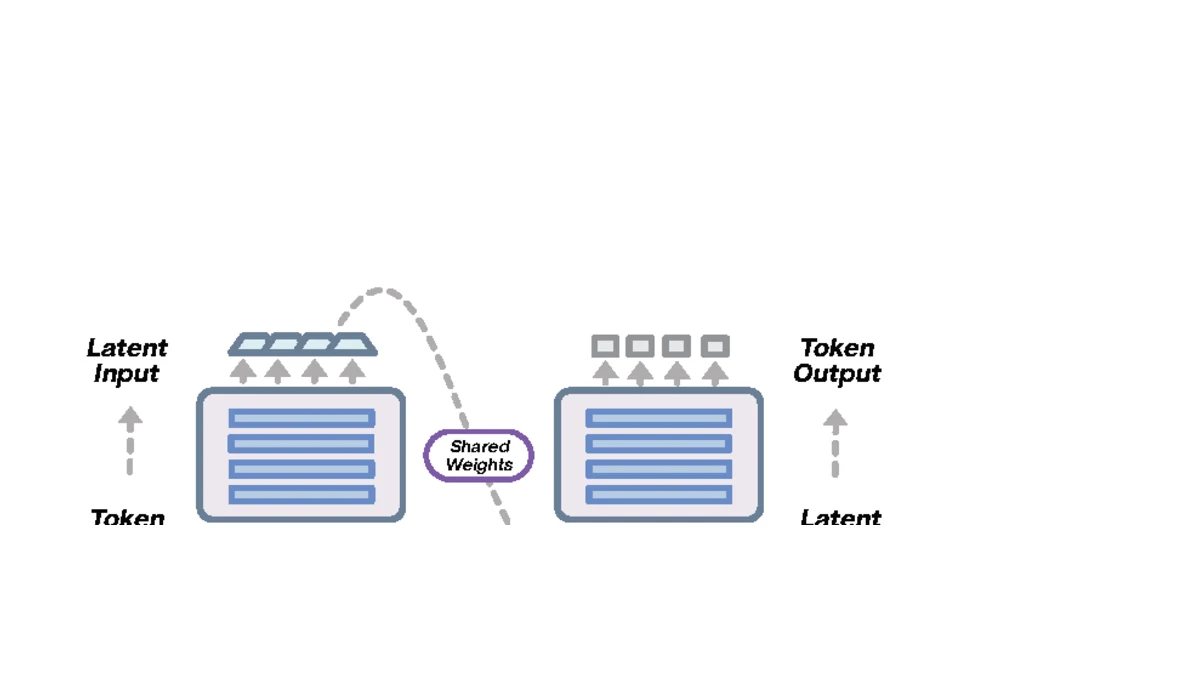
A large-scale looped transformer recipe that folds dense checkpoints into recurrent code models and scales iterative computation through pre-training and post-training.
Findings of the Association for Computational Linguistics: ACL 2026
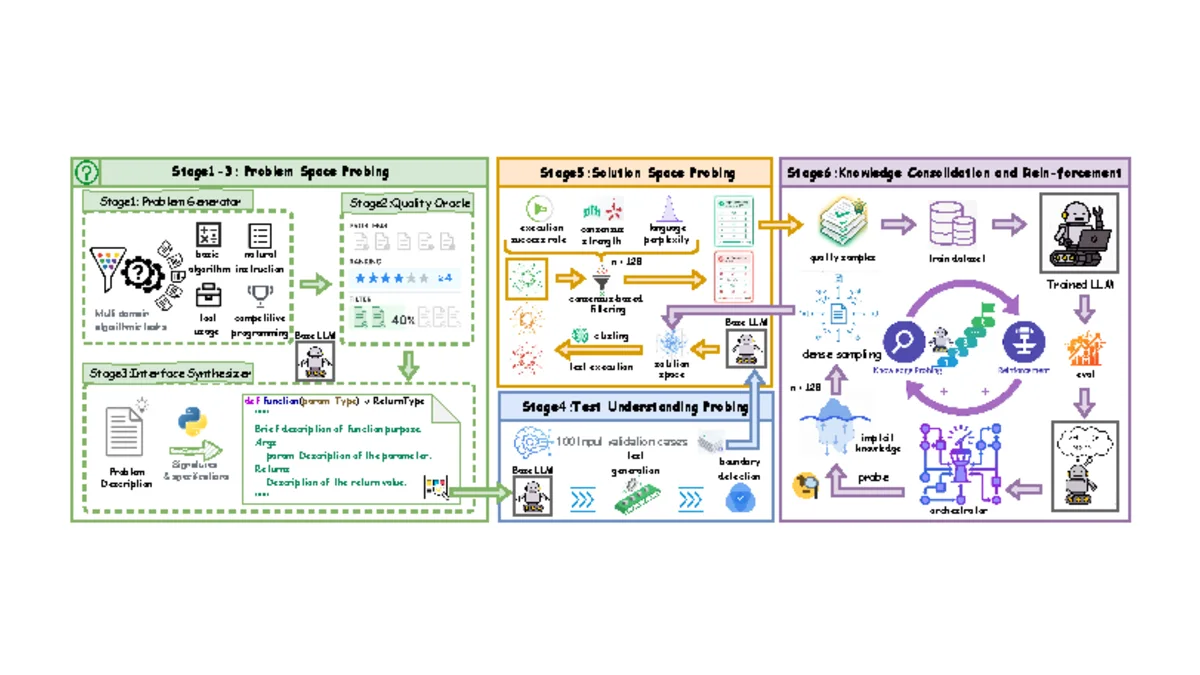
An unsupervised framework that probes internal model knowledge and uses execution-driven self-training to improve code generation without external training data.
Findings of the Association for Computational Linguistics: ACL 2026
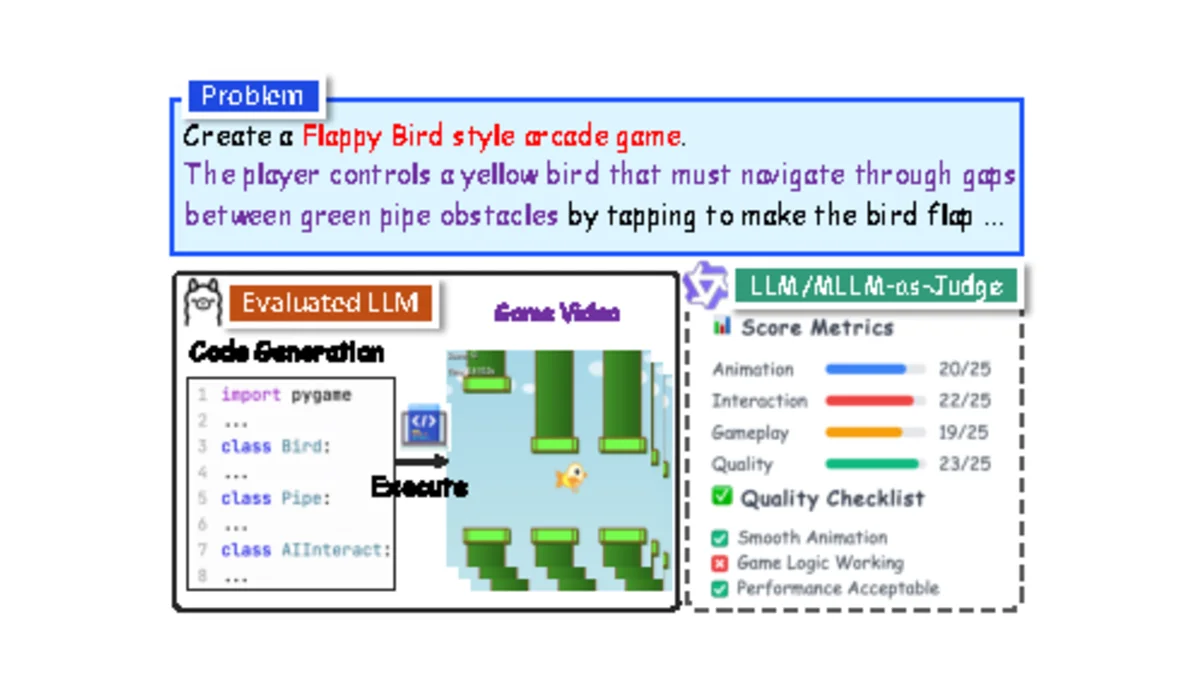
A multimodal benchmark of 2,219 visual game-generation tasks that evaluates code correctness together with playability, visual quality, and interaction.
Jian Yang, Shawn Guo, Wei Zhang, Tianyu Zheng, Yaxin Du, Haau-Sing Li, Jiajun Wu, Yue Song, Yan Xing, Qingsong Cai, Zelong Huang, Chuan Hao, Ran Tao, Xianglong Liu, Wayne Xin Zhao, Mingjie Tang, Weifeng Lv, Ming Zhou, Bryan Dai
arXiv 2026
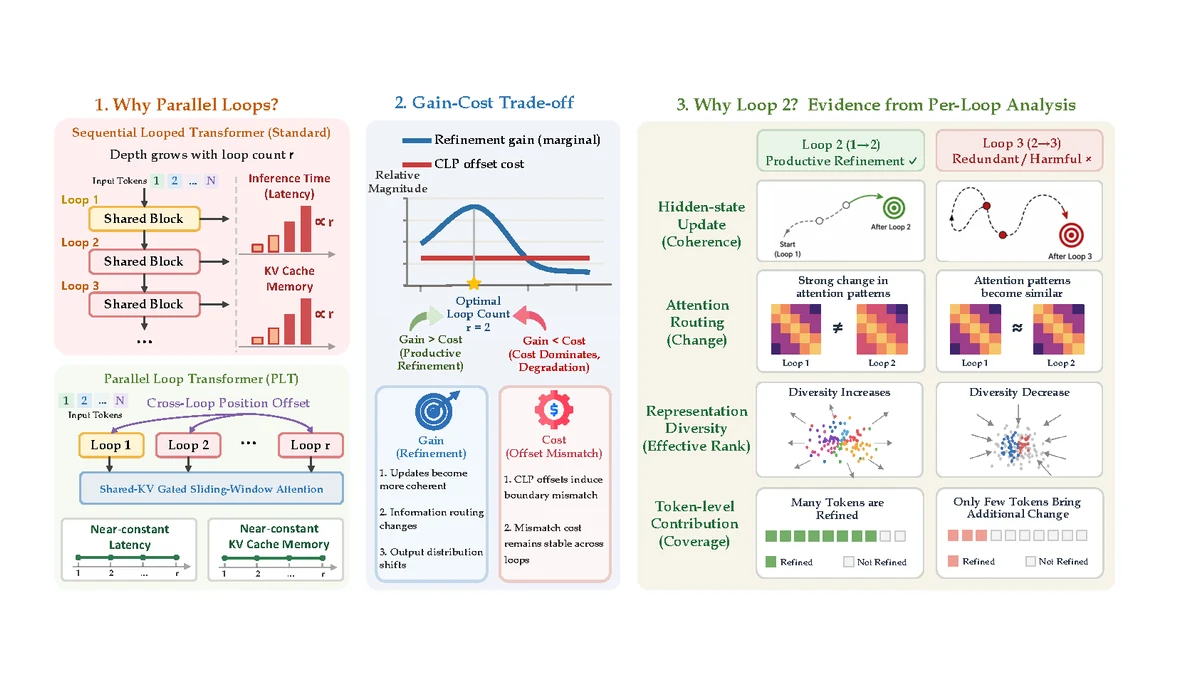
A 7B parallel loop transformer study showing that a second loop gives the main refinement gain while additional loops add offset cost and diminishing returns.
Haowen Wang, Yaxin Du, Jian Yang, Jiajun Wu, Shukai Liu, Yuxuan Zhang, Pingjie Wang, Siheng Chen, Tuney Zheng, Ming Zhou, Xianglong Liu, Bryan Dai
arXiv 2026
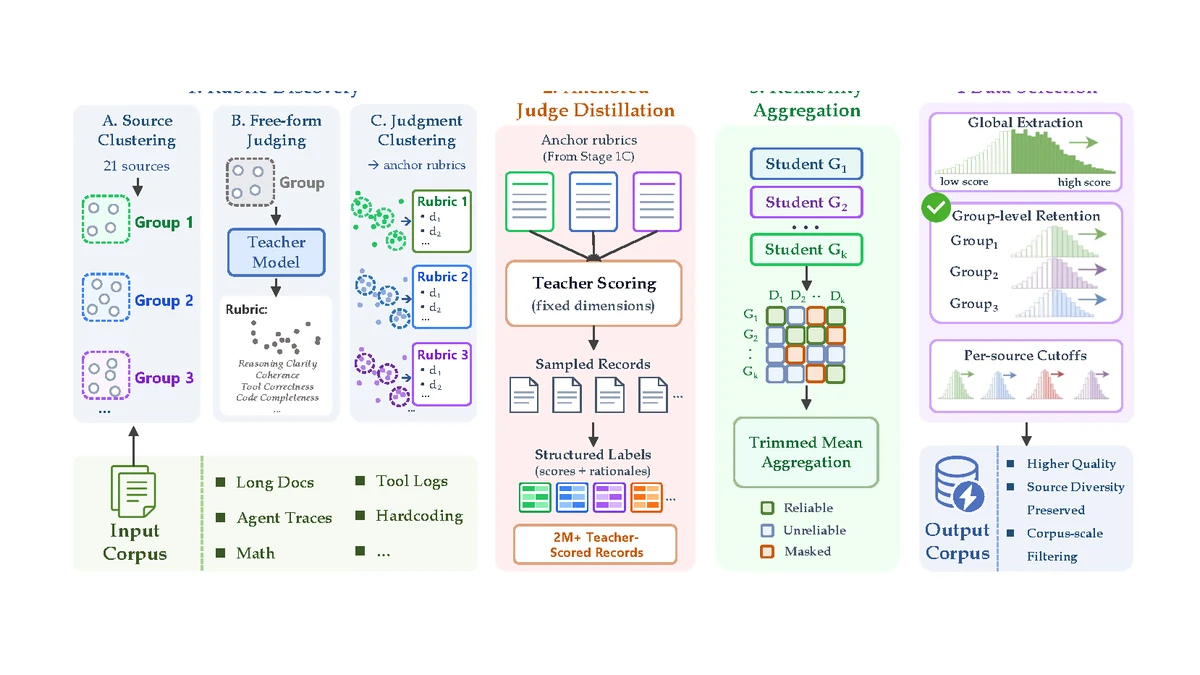
A source-aware mid-training filter that discovers rubrics, distills anchored judgments into scalable scorers, and matches full-corpus training with half the tokens.
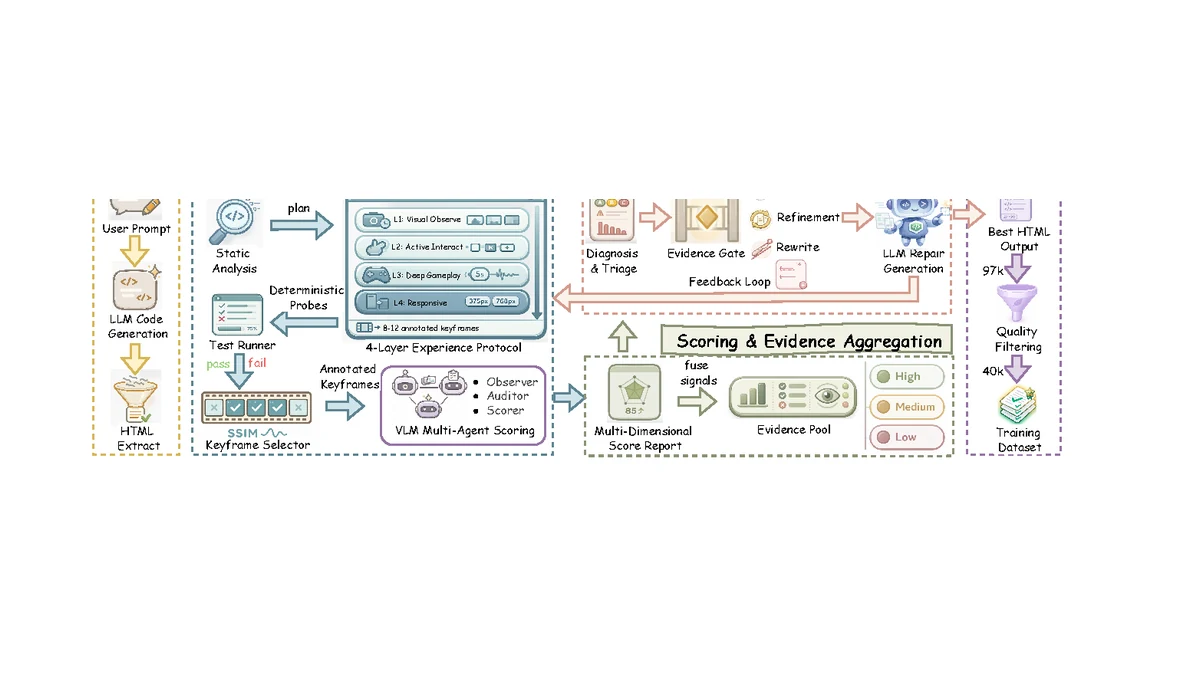
A browser-experience framework that evaluates interactive pages across states, repairs failures with executed evidence, and produces quality-cleared HTML data for training.
Jian Yang, Wei Zhang, Jiajun Wu, Junhang Cheng, Tuney Zheng, Fanglin Xu, Weicheng Gu, Lin Jing, Yaxin Du, Joseph Li, Yizhi Li, Yan Xing, Chuan Hao, Ran Tao, Ruihao Gong, Aishan Liu, Zhoujun Li, Mingjie Tang, Chenghua Lin, Siheng Chen, Wayne Xin Zhao#, Xianglong Liu#, Ming Zhou#, Bryan Dai, Weifeng Lv(# corresponding author)
arXiv 2026
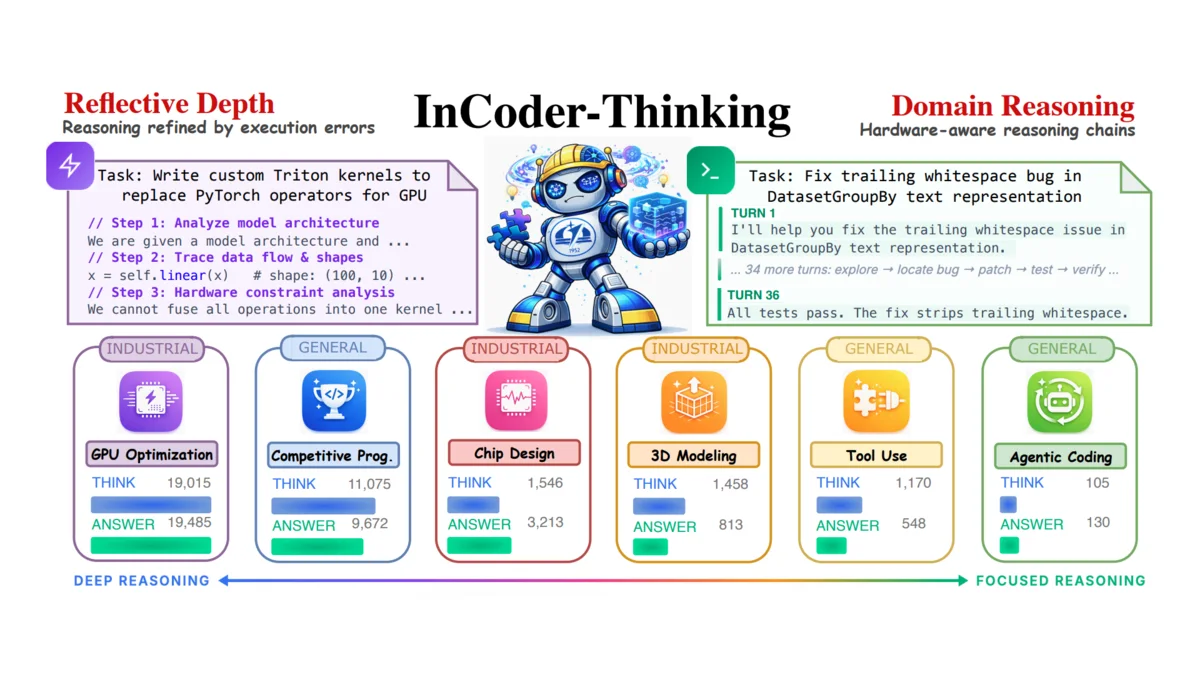
A reasoning-oriented industrial code model trained with error-driven chains of thought and execution traces across chip design, GPU optimization, and embedded systems.
Jian Yang, Wei Zhang, Jiajun Wu, Junhang Cheng, Shawn Guo, Haowen Wang, Weicheng Gu, Yaxin Du, Joseph Li, Fanglin Xu, Yizhi Li, Lin Jing, Yuanbo Wang, Yuhan Gao, Ruihao Gong, Chuan Hao, Ran Tao, Aishan Liu, Tuney Zheng, Ganqu Cui, Zhoujun Li, Mingjie Tang, Chenghua Lin, Wayne Xin Zhao#, Xianglong Liu#, Ming Zhou#, Bryan Dai, Weifeng Lv(# corresponding author)
arXiv 2026
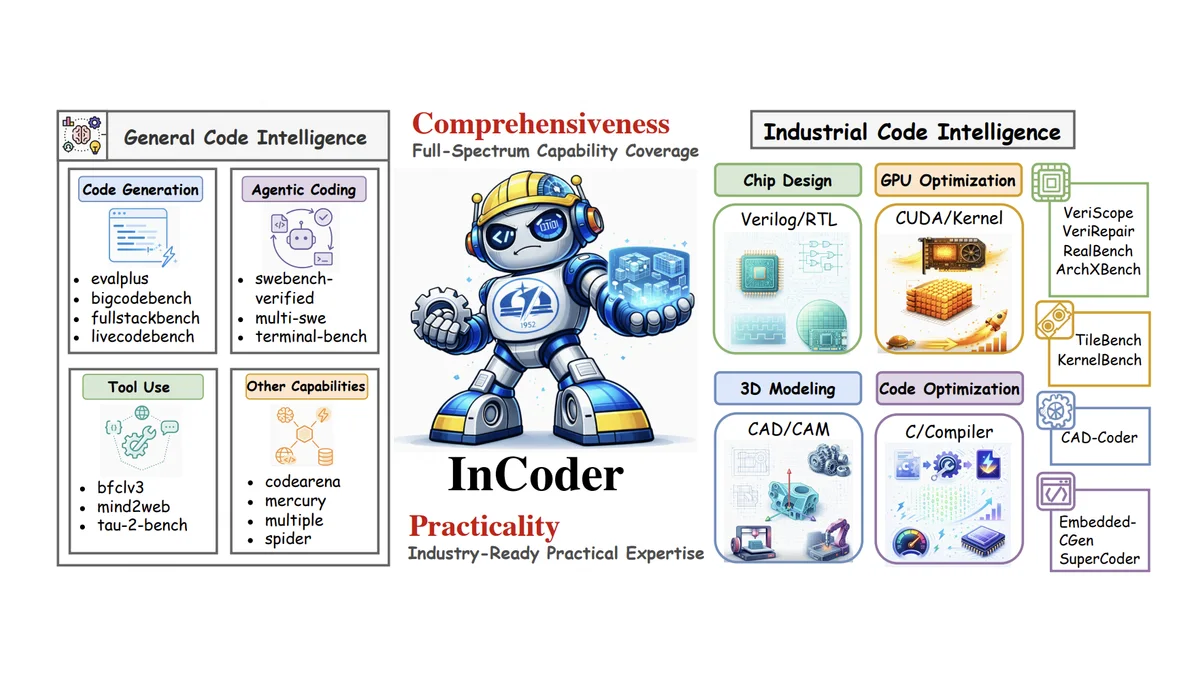
A 32B-parameter foundation model unifying general coding with industrial domains including chip design, GPU kernels, embedded systems, compiler optimization, and 3D modeling.
Jian Yang, Wei Zhang, Shawn Guo, Zhengmao Ye, Lin Jing, Shark Liu, Yizhi Li, Jiajun Wu, Cening Liu, X. Ma, Yuyang Song, Siwei Wu, Yuwen Li, L. Liao, T. Zheng, Ziling Huang, Zelong Huang, Che Liu, Yan Xing, Renyuan Li, Qingsong Cai, Hanxu Yan, Siyue Wang, Shikai Li, Jason Klein Liu, An Huang, Yongsheng Kang, Jinxing Zhang, Chuan Hao, Haowen Wang, Weicheng Gu, Ran Tao, Mingjie Tang, Peihao Wu, Jianzhou Wang, Xianglong Liu, Weifeng Lv, Bryan Dai
arXiv 2026
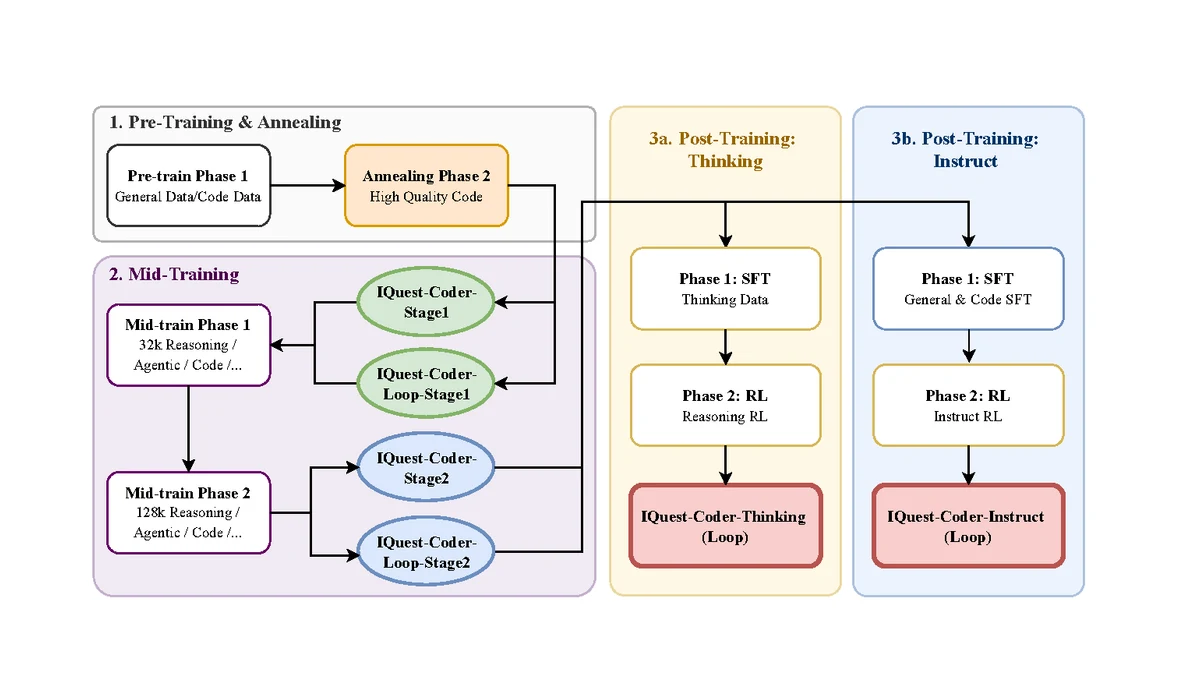
A family of 7B, 14B, and 40B code models trained through code-flow pre-training, reasoning and agentic mid-training, and separate thinking and instruction paths.
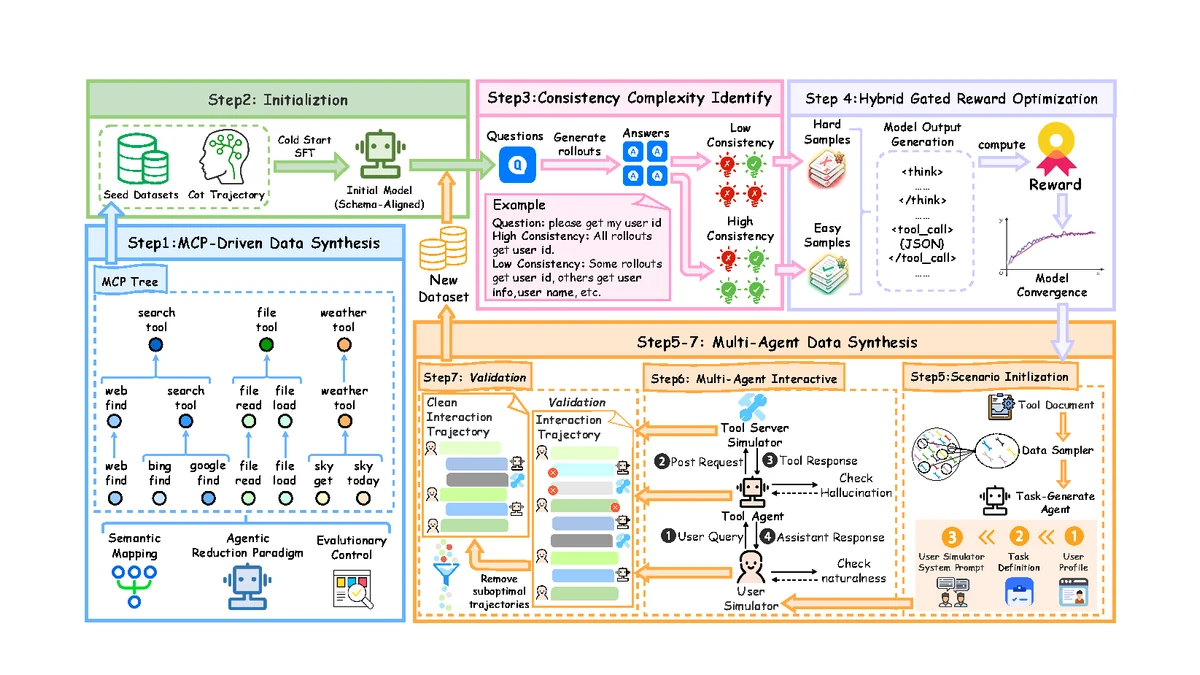
InfTool synthesizes verified tool-use trajectories through multi-agent role-playing, then closes the loop by training improved models to generate increasingly capable data.
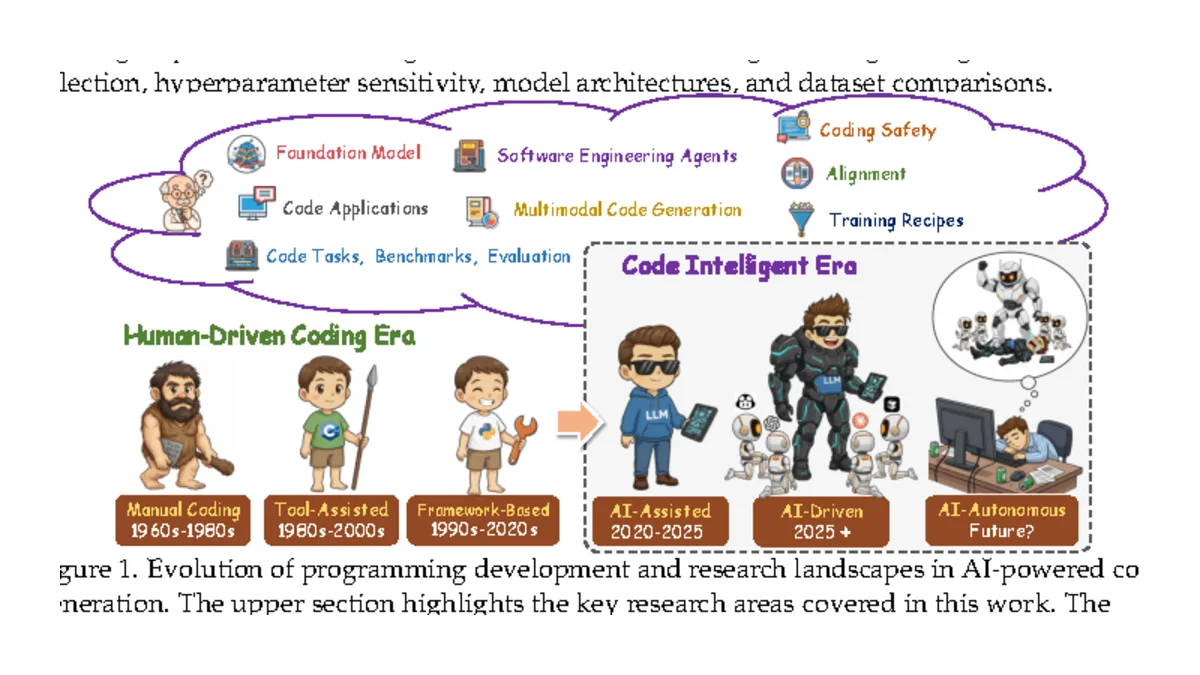
A comprehensive guide to code-model data, pre-training, post-training, evaluation, autonomous agents, and the gap between academic benchmarks and real development.
Yongqi Li, Jiajun Wu, Shangqing Tu, Jifan Yu, Huiqin Liu, Lei Hou, Juanzi Li
Proceedings of the 34th ACM International Conference on Information and Knowledge Management
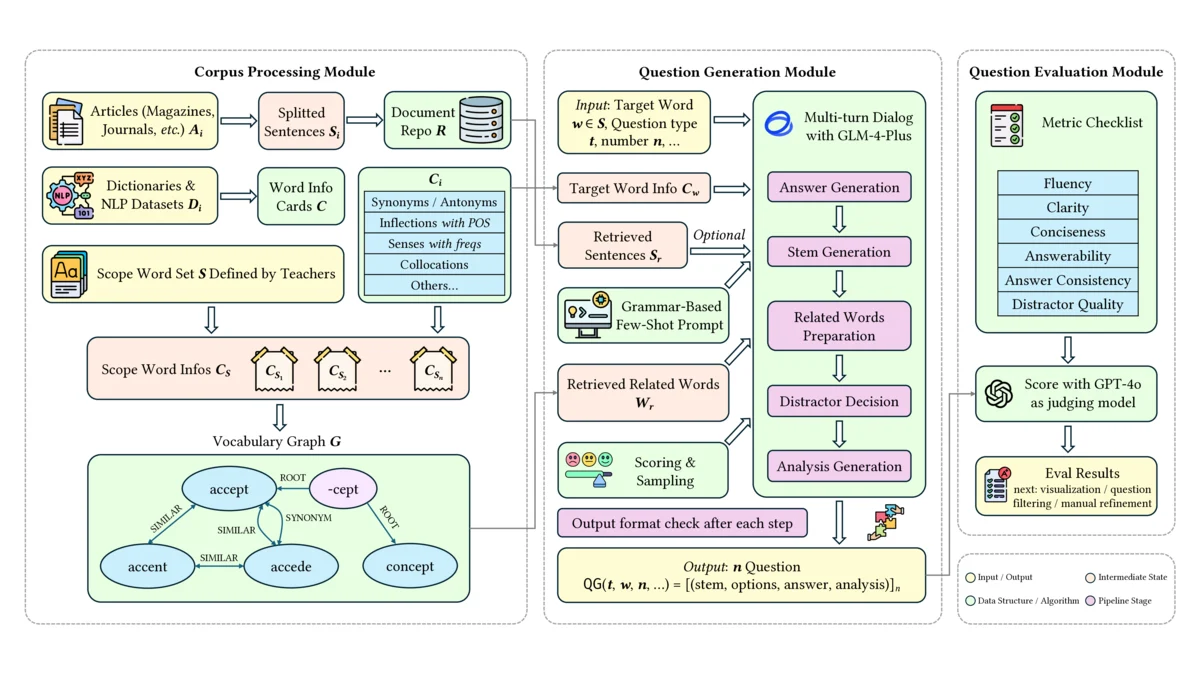
A deployable vocabulary-question generation system that combines language resources with multi-stage LLM generation and evaluation to support varied classroom question types.
Xiaoli Lian, Jiajun Wu, Xiaoyun Gao, Shuaisong Wang, Li Zhang
ACM Transactions on Software Engineering and Methodology
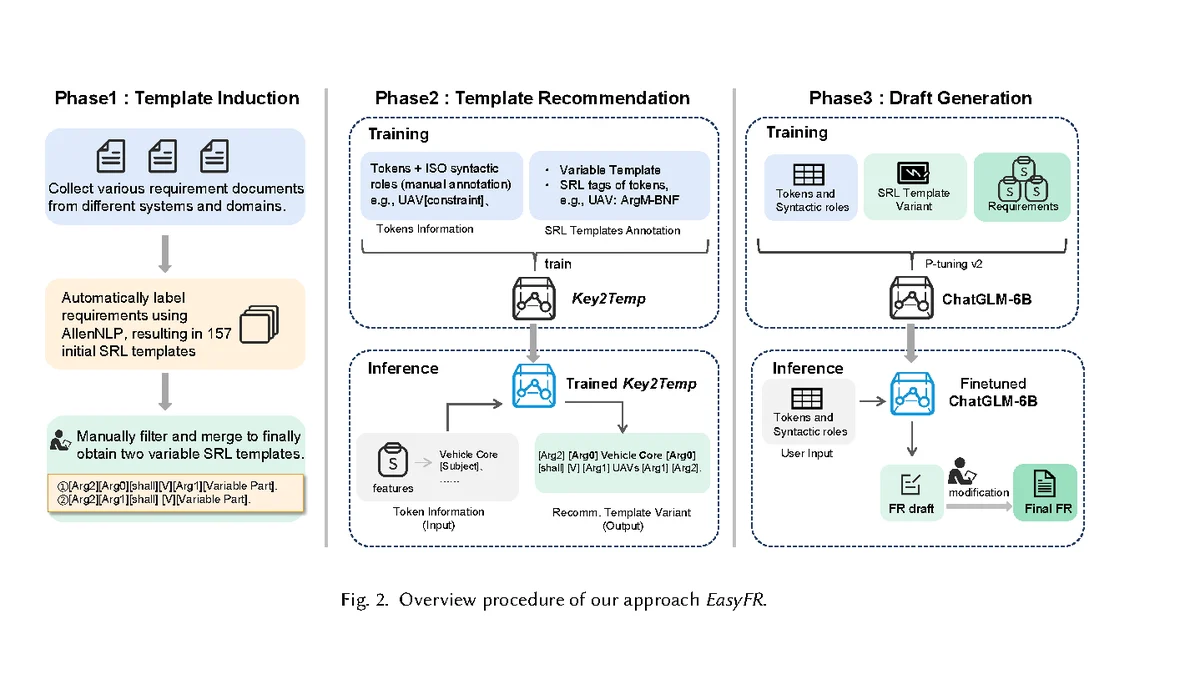
EasyFR turns conceptual features into testable functional requirements through semantic-role template induction, template recommendation, and guided draft generation.
Proceedings of the ACM on Software Engineering, FSE 2025
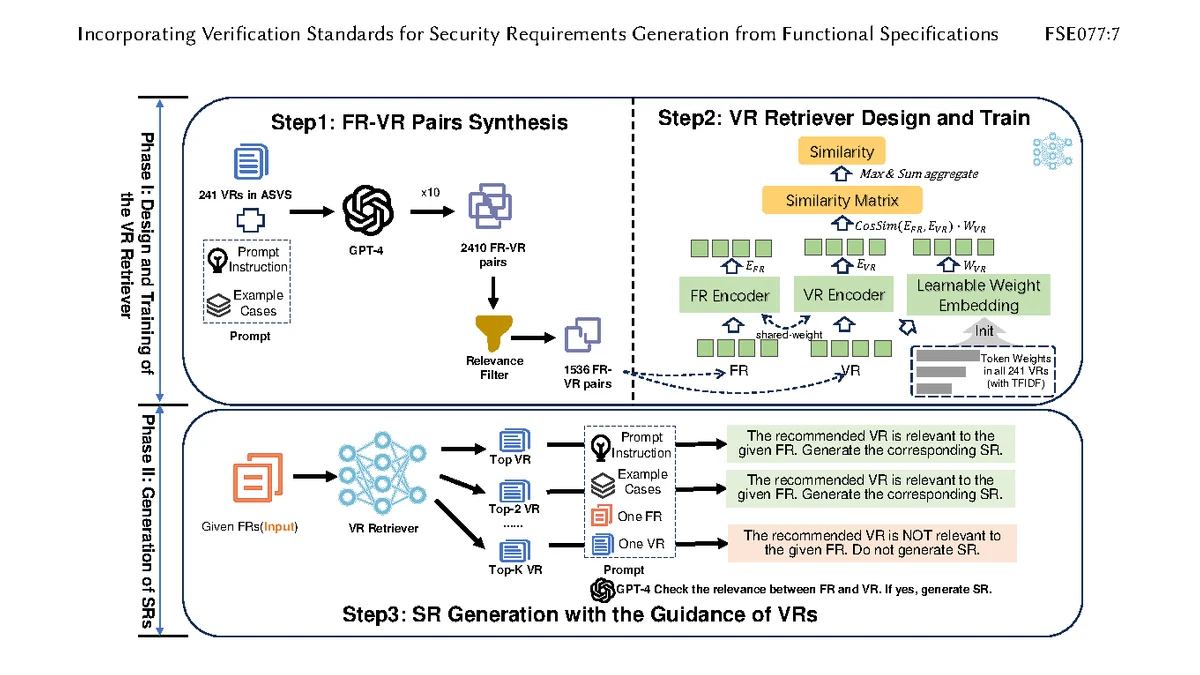
F2SRD derives actionable security requirements from functional specifications by retrieving relevant OWASP ASVS verification requirements and using them to guide generation.